
Every cervix needs screening.
This page has been developed to support people in LGBTIQA+ communities with information about cervical screening that reflects their experiences and needs. It has been informed by communities across Canberra, centring the lived experience of LGBTIQA+ people with a cervix.
Cervical screening is important for everyone with a cervix. If you have a cervix, are aged 25 to 74 and have ever had any kind of sexual contact, cervical screening is recommended regardless of your gender, sexuality or the type of sex you’ve had.
We know that, for some people in our communities, cervical screening information hasn’t always felt relevant or clear. This can make it harder to know if screening is right for you or what to expect.
From the community: “I put it off because I had no understanding of what happens during it and where I needed to go to get one, if I needed specialised clinic for help and if that would mean I needed to out myself.”
Why cervical screening matters
Cervical screening detects abnormal cell changes in the cervix, which can cause cervical cancer. Most cases of cervical cancer are linked to the human papillomavirus (HPV), which can be passed through various forms of sexual contact. Anyone with a cervix is at risk, regardless of gender identity, sexuality or the type of sex they have.
Cervical screening is recommended every 5 years for people aged 25 to 74 who have a cervix and have ever had any kind of sexual contact. The test can be self-collected or collected by a healthcare-provider, depending on eligibility and personal preference.
Do I need cervical screening?
All people with a cervix are at risk of developing cervical cancer. Cervical cancer affects all people with a cervix equally regardless of gender and sexuality.
You need regular cervical screens if you:
- have a cervix (regardless of gender or sexual orientation)
- are aged 25 to 74 years old
- have ever had sexual contact of any kind.
We acknowledge that there is great diversity in the ways that people may connect sexually. To align with the National Cervical Screening Guidelines, this page uses ‘sexual contact’ to refer to activity including:
- sexual intercourse/sexual penetration of the genitals
- sex using hands or sex toys
- oral sex
- intimate genital skin contact
- anal sex.
It is also important to note that not all sexual contact is consensual or comprehended.
This page provides clear, inclusive information to help you understand what to expect, explore your options and feel more informed and in control of your care.
What is HPV and how is it linked to cervical cancer?
HPV is a very common virus. Most people will have HPV at some stage in their lives, often without knowing because it doesn’t usually cause any symptoms.
There are more than 150 strains of HPV. Over 40 of these affect the genitals, including 14 strains that can cause cancer and other strains that cause warts.
HPV can be passed on in a variety of ways including skin-to-skin contact, sex toys and all forms of sexual contact. Using barrier protection methods such as condoms and dental dams can help minimise HPV being passed on during sex; however, HPV can spread through skin-to-skin contact in areas the barrier may not cover.
There is no treatment for HPV and the body’s immune system usually clears it naturally.
Cervical cancer occurs when there is a significant growth of abnormal cells in the cervix. Most cervical cancers are caused by specific strains of HPV, typically HPV 16 and 18.
If HPV does not clear naturally, it may cause changes to the cells of the cervix. HPV-related changes to cervical cells can sometimes develop into cervical cancer. This generally happens slowly, sometimes over 10 to 15 years.
Cervical screening every 5 years is the most effective way to detect HPV and monitor any cell changes that might become cervical cancer. Screening works by testing the cervix and/or vagina for the presence of HPV, helping monitor the risk of cervical cancer developing.
Not everyone who has HPV will get cervical cancer. In fact, 80% of people who test positive for high-risk HPV strains won’t develop cervical cancer.
When someone has a strain of HPV that may lead to cervical cancer, extra steps can be taken to monitor the cervix for cell changes. Any cell changes that are found can then be treated early.
| Fact: Australia is on track to be the first country in the world to eliminate cervical cancer. |
What is the cervix?
|
The cervix is the neck of the uterus and opens into the vagina. It is typically 3 to 5cm wide and around 4cm long. If you were to look at it deep inside the vagina, you’d see a small, glossy pink-purple (depending on where someone is in their cycle) doughnut with a tiny hole. It feels a bit like very firm jelly. The cervix is muscular and helps move fluids in and out of the uterus, including menstrual fluid leaving the body and sperm (from ejaculate) entering the uterus. The cervix also produces mucus to create lubrication and plays a large role in pregnancy and childbirth. |
 |
What is the Cervical Screening Test?
The Cervical Screening Test (also called CST) screens for both HPV and, in some circumstances, cervical cell changes. The Cervical Screening Test is more sensitive than the previously used Pap test, which only examined cell changes. This increased sensitivity means the frequency of cervical screening has moved to 5 yearly.
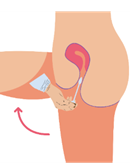
The Cervical Screening Test uses a swab (a bit like a COVID-19 swab) that is circled in the vagina and/or over the cervix. The swab collects a sample of cells which are used to find out whether HPV is present.
Depending on how you do your test and the results, the test may also check for cervical cell changes. This means cervical cells can be monitored or treated to prevent cervical cancer from developing or progressing further.
Where can I get a Cervical Screening Test?
Cervical Screening Tests can be completed by trained doctors, nurses and midwives. Generally, cervical screening is available at your GP clinic, some health centres (such as Aboriginal health centres) and some sexual health centres. They may also be offered at pop-up clinics in your local area.
You can also ask your regular healthcare provider if they offer cervical screening or can refer you.
What are my options for cervical screening?
There are 2 ways to get a Cervical Screening Test. For most people, self-collection is now the first option offered. Many people prefer self-collection as it offers more control and does not involve a speculum.
Self-collected Cervical Screening Test
Many people don’t know there is a version of the Cervical Screening Test where you collect the sample yourself. It’s a simple, safe and quick test and is just as accurate at detecting HPV as having a healthcare provider conduct it. Self-collected cervical screening can be more comfortable for some people as it provides privacy and control, and may feel less invasive as it does not involve a speculum.
The self-collected test is available for most people. It’s not recommended for a small number of people with a higher cervical cancer risk, specifically if you have symptoms of cervical cancer, as it does not allow for cervical cells to be tested for changes. If you’re asymptomatic, it is your choice how your test is performed. However, it is important to have a discussion with your healthcare provider on the best option for you, depending on your history and personal circumstance.
You might be worried about doing it incorrectly. It's unlikely to do the test incorrectly, but a few people may be asked to repeat it.
Healthcare provider-collected Cervical Screening Test
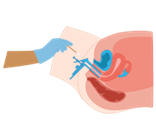
A Cervical Screening Test can also be collected by a healthcare provider. This option may be recommended in some situations or preferred by some people.
For example, if you have symptoms of cervical cancer, a higher-risk history or are receiving specialised follow-up care, you may need to have your screening test collected by a healthcare provider.
When a cervical screen is collected by a healthcare provider, it can test for both HPV and changes to cervical cells.
What happens during a Cervical Screening Test?
From the community: “Now that I know what it’s actually like it’s much less stressful to think about, and I can tell other people in my community too.”
There are 2 ways a Cervical Screening Test can be done. What happens will depend on how your sample is collected.
If you’re collecting the Cervical Screening Test yourself (self-collected)




If your healthcare provider is collecting the Cervical Screening Test

What should a safe and inclusive cervical screening experience feel like?
You deserve to feel respected, informed and in control during your cervical screening.
From the community: “My best experience was with a practitioner who acknowledged my pain and was good about staged consent.”
A safe and inclusive experience may include:
- being treated with respect and having your identity affirmed by all staff involved in your care
- being asked what terms for your body feels right for you, and having that language used throughout the whole appointment
- having the process explained before and during the test
- being offered options, including self-collection where appropriate
- being able to ask questions and pause or stop the test at any time.
If something doesn’t feel right, you can questions, request changes or seek care from another provider.
Support during your cervical screening
It’s understandable you might feel nervous about getting a cervical screen. There are lots of options to help you feel more comfortable through the process:
- Write out a list of questions you want to ask your healthcare provider.
- Read and learn about cervical screening before your appointment so you know what to expect.
- Discuss any concerns or questions you have with your healthcare provider before the Cervical Screening Test, to ensure they can help you as you need.
- Talk to your healthcare provider about the possibility of inserting the speculum yourself.
- Take a fidget object with you so you’ve got something to focus on.
- Take a support person into the appointment with you. It’s a good idea to have a chat with them before the appointment so they know what to expect and what support you’d like from them.
- Listen to music. Music that feels good before, during and/or after the appointment may help you feel regulated.
-
Meditation may help create feelings of safety. You could try a simple box breathing exercise:
- Breathe in slowly through your nose for 4 seconds.
- Hold your breath for 4 seconds.
- Exhale slowly through your mouth for 4 seconds.
- Hold your breath for 4 seconds.
- Repeat the cycle for a few minutes.
What happens after a Cervical Screening Test?
What happens after a Cervical Screening Test depends on your results.
Most people will receive a result showing that HPV was not found. This means you can return to routine screening and you’ll receive a reminder from the National Cancer Screening Register to screen again in 5 years. If you’re unsure about your result or haven’t received it, you can follow up with your healthcare provider.
If HPV 16 or 18 is found, you’ll be contacted and referred to see a gynaecologist for a colposcopy. This is the case regardless of whether your test was self-collected or collected by a healthcare provider.
A colposcopy uses a speculum and a magnifying instrument called a colposcope to allow closer inspection of the cervix. The healthcare provider may take a biopsy (sample of tissue) of the cervix. A colposcopy is a standard part of follow-up care to look for abnormalities and cell changes of the cervix that weren’t picked up during the Cervical Screening Test.
If other types of HPV are found, a sample of cells must be tested for any changes.
- Self-collected samples can’t currently be tested for cell changes. If you self-collected, you’ll need to return to have a healthcare provider collect a sample.
- If your sample was collected by a healthcare provider, it will be tested for cell changes.
Depending on those results, you may be recommended a colposcopy or a repeat Cervical Screening Test in 12 months.
If HPV is found, cervical screening is usually repeated after 12 months. In many cases, the body will have cleared HPV in this time. If not, appropriate follow-up care will continue based on your results.
This does not mean you have cervical cancer. It means that further checks may be needed to keep you safe and well.
What if I feel distressed after my appointment?
It’s okay to have different emotional responses after a cervical screening experience. You might feel fine, relieved, uncomfortable or distressed. All of these responses are valid.
If you need help immediately, there are supports available: Crisis Contacts and Other Supports
Take some time to process what has happened, what was said and any actions you might need to follow up on. You might like to review any notes you took or make a plan for any next steps. If you’re feeling at capacity, it’s okay to come back to these things later by setting a reminder or asking someone you trust to support you.
Some people find it helpful to do small things that support their body and mind after an appointment. You might like to:
- go for a short walk, moving intentionally
- take a nap with your favourite or weighted blanket
- practice deep breathing exercises
- meditate with a guided meditation app
- eat a balanced meal with colourful, nourishing foods
- talk with a supportive friend or partner
- express your feelings
- take your mind off things through an activity such as drawing or painting
- have a bath or shower
- spend some time in nature.
You can add anything else that feels good for you here. Self-care can be whatever you need or want in the moment.
National Cancer Screening Register and cervical screening reminders
The Cervical Screening Register (Register) is part of the National Cancer Screening Register and gets information from Medicare. You are automatically added to the Register if you’ve ever had a Pap or Cervical Screening Test at any point in your life. You’ll also be automatically added to the Register when you turn 25 if your gender in Medicare is ‘female’.
If you’ve never had a Pap or Cervical Screening Test and have changed your gender in Medicare to ‘male’ before you turned 25, you won’t be automatically added to the Register.
If you’re under 25, you can ask your healthcare provider to send you a reminder to do a Cervical Screening Test when you turn 25.
If you’re over 25, speak to your healthcare provider about having a Cervical Screening Test. Having your first Cervical Screening Test will then add you to the Register and you can nominate how you receive your reminders to manage privacy.
You will stay on the Register (even if you change your gender in Medicare) unless you manually remove yourself or until your exit screen around 74 years of age.
The National Cancer Screening Register sends reminders when a screen is due. These can be received by SMS and/or by post. Reminders are non-gendered. The SMS reminder doesn’t use a name and you can provide a pseudonym for paper reminders. Paper reminders arrive in a plain, unbranded envelope to mitigate privacy concerns.
Screening reminders and personal details (such as name changes and reminder preferences) can be made through the National Cancer Screening Register Participant Portal. This portal can be linked to your MyGov ‘linked services’ for ease of access.
For more information, contact the National Cancer Screening Register on 1800 627 701.
I’ve never had sex with someone with a penis. Am I at risk of cervical cancer?
Yes. HPV can be passed on by any person regardless of their anatomy. This means all people with a cervix who have ever been sexually active are at risk of HPV infection and cervical cancer.
I’m trans or non-binary. Do I need a cervical screen?
If you have a cervix, are between 25 and 74 years old and have had sexual interactions of any kind then yes, cervical screening every 5 years is recommended (or more often if your test results require closer follow up). You might like to consider how you talk about your anatomy with your healthcare provider before your appointment.
If you’ve had a vaginoplasty and don’t have a cervix, you don’t need cervical screening. However, you may like to talk to your healthcare provider about vaginal HPV screening.
I’m on testosterone (T). Do I need a cervical screen?
If you have a cervix, are between 25 and 74 years old and have had sexual interactions of any kind then yes, cervical screening every 5 years is recommended (or more often if your test results require closer follow up). Being on testosterone doesn’t change the risk of cervical cancer.
Testosterone can cause changes in the genitals that may make cervical screening less comfortable (such as dryness or irritation). A doctor can provide a prescription for an oestrogen-based product to be used inside the vagina for a short period of time before the cervical screen. This can make the test more comfortable by directly addressing these changes. There are no systemic nor feminising effects from using this treatment and it won’t impact testosterone treatment.
Alternatively, you may choose a self-collected test if you’re eligible.
I’m intersex. Do I need a cervical screen?
If you have a cervix or cervical tissue, are between 25 and 74 years old and have had sexual interactions of any kind then yes, cervical screening every 5 years is recommended. You might like to consider how you talk about your intersex variation and anatomy with your healthcare provider before your appointment. If you’re unsure if you have a cervix or cervical tissue, consult your care team to get advice about your recommendations for cervical screening specific to your anatomy. This may include having a test which checks for HPV in the vagina if there is no cervix or cervical tissue and there is a risk of vaginal cancer.
I’ve had a hysterectomy. Do I need a cervical screen?
Cervical screens are required if you’ve had a partial hysterectomy and your cervix was not removed as part of your hysterectomy. If your cervix was removed, you may need a different test of the vaginal walls to check for the presence of HPV. You’ll need to confirm this with your healthcare provider as it’s based on your individual circumstances.
I’m living with HIV or an immune system deficiency. Does that change cervical screening?
You may need to screen every 3 years instead of every 5 years. This monitors any potential risk if your immune system takes a bit longer to clear HPV. Speak to your healthcare provider to get the right information for you and get your screening reminders at the correct interval.
I’ve had the HPV vaccine. Do I need cervical screens?
Yes, cervical screening is still recommended even if you’ve been immunised against HPV. The HPV vaccine, like all vaccines, doesn’t stop you from getting a HPV infection. It helps the body fight the infection, which means HPV is generally cleared faster, reducing the risk of cervical cell change and cervical cancer.
I haven’t had the HPV vaccine. Should I get it now?
The HPV vaccine is free for people up to 26 years and routinely provided to year 7 high school students. It is not generally recommended for people over 26 years due to the potential of prior exposure to HPV.
If you didn’t get this vaccination at school or anywhere else, you can get it anywhere you get vaccines such as GP clinic and health centres.
Some people at higher risk of HPV may be recommended the vaccine even if they are over 26. Talk to your healthcare provider to see if this is right for you.
I haven’t had penetrative sex of any type. Do I need to have cervical screens?
If you’ve had any sexual contact that involved your genitals and you have a cervix then yes, cervical screening is recommended. HPV can be passed on in several ways including through skin-to-skin contact, fingers and shared sex toys. This means you can get HPV and be at risk of cervical cancer even if you haven’t had penetrative sex.
Does the Cervical Screening Test hurt or feel uncomfortable?
Everyone has a unique experience of cervical screening. Our bodies vary and each healthcare provider does things slightly differently. For some people, cervical screening is quick and painless. For others, it may feel uncomfortable, pinchy or painful. Some people may experience discomfort or pain for a range of reasons. This can include people:
- taking testosterone
- who are post-menopausal
- with genital or pelvic pain conditions
- who experience dryness, sensitivity or anxiety
- who have any other condition that may cause additional pain during a Cervical Screening Test.
Many people’s understanding or expectations of cervical screening are based on past experiences when screening was only done using a speculum. Self-collection is a newer option that many people find more comfortable, as it does not involve a speculum. People who have used self-collection often report feeling more control and comfort during their screening.
Most people are eligible for self-collection. However, in some situations, a collection by a healthcare provider may be recommended. If you think this option may reduce discomfort for you, you can ask your healthcare provider about your options.
If you need a test collected by a healthcare provider, there are ways to make the experience more comfortable. You can talk to your healthcare provider about options such as using a smaller speculum, taking more time, using lubrication, trying a different position or inserting the speculum yourself. In some cases, oestrogen-based treatments (which are local and not feminising), pain relief or anti-anxiety medication may also be recommended.
Your healthcare provider should be open to hearing about your needs and working with you to make the experience as comfortable as possible. You can also ask to pause or stop the test at any time.
Is the Cervical Screening Test the same as a Pap Test/smear?
In Australia, the Cervical Screening Test replaced the Pap test (also known as Pap smear) in 2017. The Pap test only tested for cell changes (not HPV).
Testing for HPV is considered more sensitive in early detection and monitoring, as HPV causes the majority of cervical cancer cases. This means screening has changed from 2 yearly to 5 yearly for most people.
More resources
- Swell, Meridian’s guide to being sexually well for lesbian, bisexual and queer+ women. This website has resources to navigate sexual health and wellness from STIs and testing to protection and self-care.
- Messy Meridian website created for and by trans and gender diverse folks and their allies, made in collaboration with A Gender Agenda. This website embraces the beautifully complex and messy intersection of sex, intimacy, relationships and identity in safe and pleasurable ways.
- National Cancer Screening Register’s page on the National Cervical Screening Program
- Australian Government Department of Health, Disability and Ageing’s page on the National Cervical Screening Program
- Cancer Council’s summaries of the National Cervical Screening Clinical Guidelines.
The information in this resource has been collated with input from diverse communities and made with assistance from the ACT Government under the LGBTIQ+ Community Health Services Program.
We gratefully acknowledge the support of A Gender Agenda (AGA), Sexual Health and Family Planning ACT (SHFPACT), Capital Health Network and Canberra Sexual Health Centre in the creation of these resources.